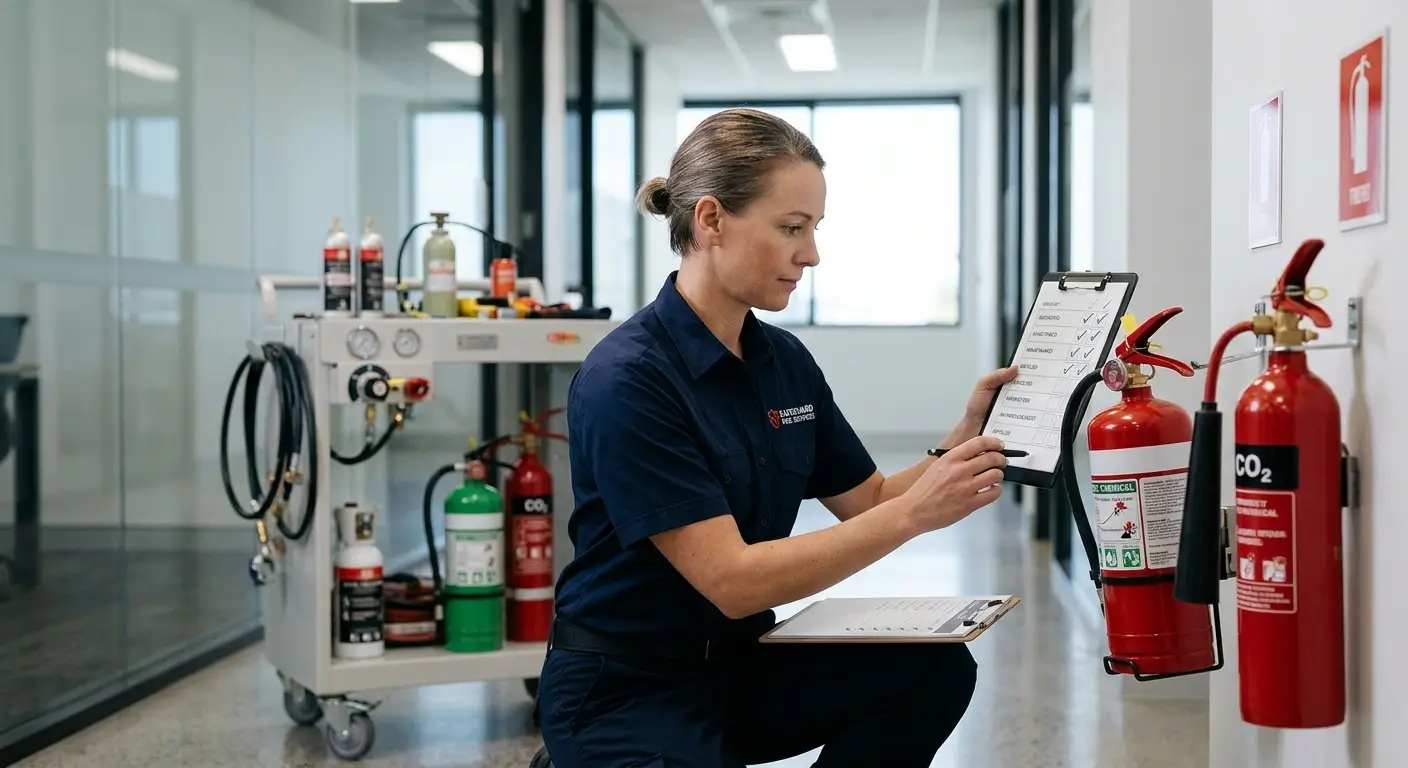
Fire safety isn’t just a checkbox—it’s something every business has to take seriously. Whether you’re running a corporate office in Dhaka, a garment factory in Gazipur, a warehouse in Narayanganj, or a commercial building out in Chattogram, you need to have the right fire extinguishers on hand.
That’s a basic part of keeping your workplace ready for an emergency.
But here’s the thing: buying fire extinguishers is just the start. You also need to check them on a regular basis, keep them in good shape, and get them refilled when necessary.
Sometimes, extinguishers look fine from the outside, but problems crop up with their pressure, hose, trigger mechanism, or what’s going on inside. If something’s wrong and no one notices, that extinguisher could let you down when you need it most.
That’s exactly why businesses need a proper routine for fire extinguisher inspection and upkeep.
In Bangladesh, corporate facilities usually have all sorts of fire extinguishers—different types and sizes—spread across multiple floors, departments, work areas, electrical rooms, and storage spaces. Without an organized inspection schedule and good records, keeping track of them all is a real challenge.
That’s where professional inspection, maintenance, and refilling services come in. They help you spot issues early, take care of repairs, and make sure your fire safety records stay up-to-date.
Fire extinguisher services in Bangladesh guide will break down how fire extinguisher inspection actually works, when maintenance or refilling makes sense, what you should look out for, and how you can set up proper servicing for business and industrial properties all over Bangladesh.
What Is Fire Extinguisher Inspection?
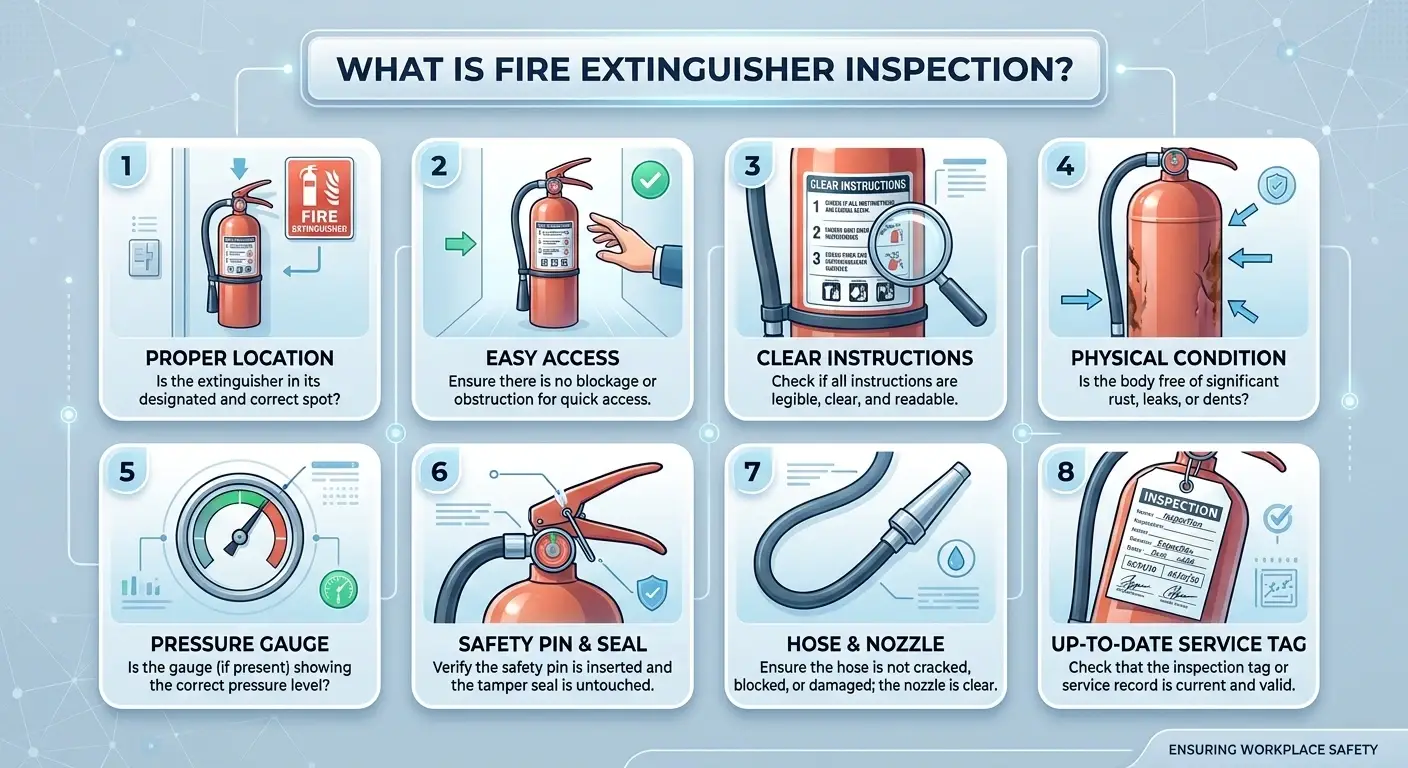
A fire extinguisher inspection simply means checking if an extinguisher is present, easy to get to, not visibly damaged, and looks ready to use. The big idea is to catch problems before you need the tool in a real emergency.
A routine inspection usually covers things like:
• Is the extinguisher in its proper spot?
• Can you get to it easily, or is something in the way?
• Are the instructions clear and readable?
• Is the body free of rust, leaks, or dents?
• Is the pressure gauge (if it has one) showing the right level?
• Is the safety pin in place, and is the tamper seal untouched?
• Do the hose and nozzle look okay?
• Is the inspection tag or service record current?
Exactly what you need to check can depend on the type of extinguishers and the manufacturer’s instructions.
In short, a fire extinguisher inspection helps you find obvious problems and figure out if you need a trained technician to take a closer look.
Regular checks like these let you keep track of fire safety equipment throughout offices, factories, warehouses, and other commercial places.
What Is Fire Extinguisher Maintenance?
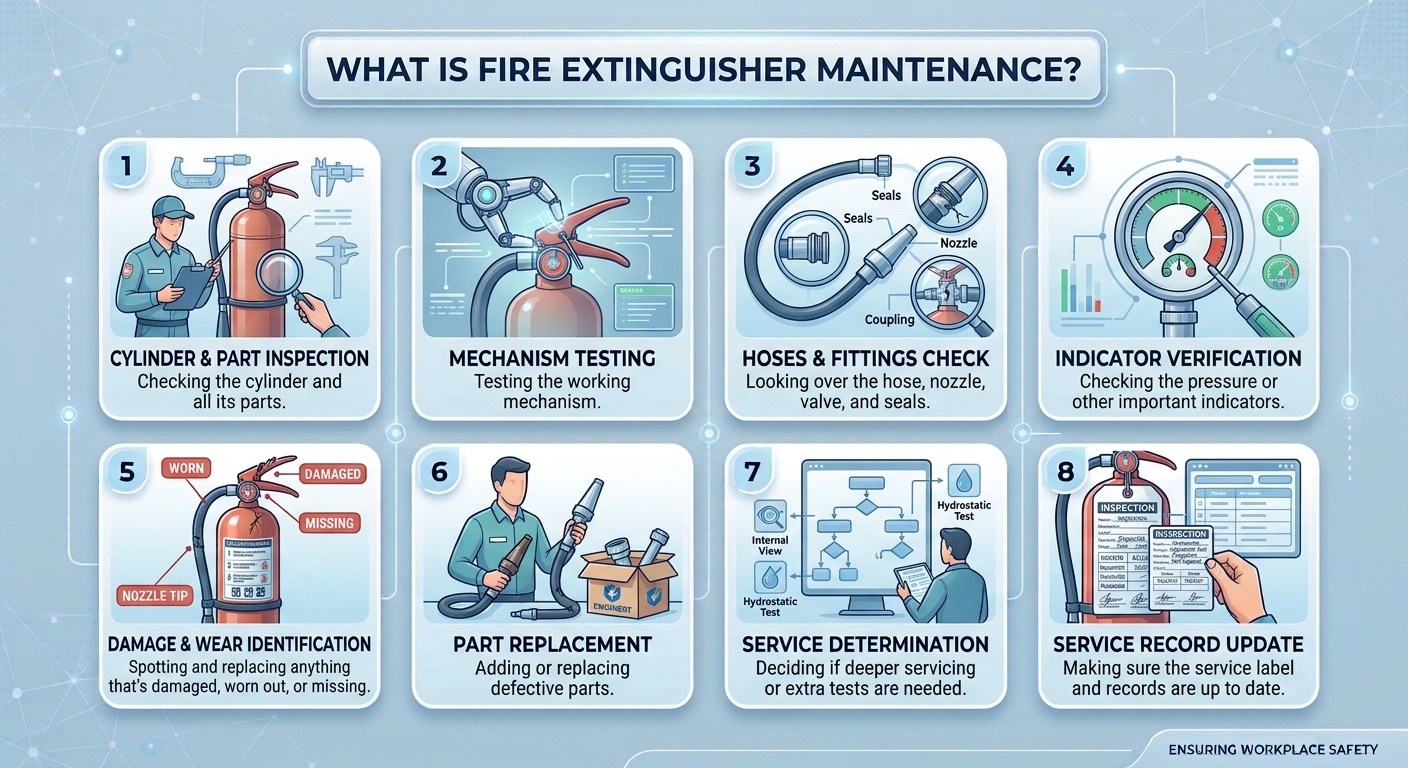
Maintenance goes a step further than just a quick look. This is a deeper dive—checking and servicing the equipment based on the extinguisher type, what the brand says, the standards that apply, and any local rules.
Depending on what you find, maintenance might include:
• Checking the cylinder and all its parts.
• Testing the working mechanism.
• Looking over the hose, nozzle, valve, and seals.
• Checking the pressure or other important indicators.
• Spotting and replacing anything that’s damaged, worn out, or missing.
• Adding or replacing defective parts.
• Deciding if deeper servicing or extra tests are needed.
• Making sure the service label and records are up to date.
Not every extinguisher needs the exact same maintenance. Some need internal inspections or pressure checks at certain times, all depending on their type and what the rules say.
Only properly trained people with the right tools should do the maintenance.
Documented maintenance programs in offices or factories help make sure problems get found and fixed, repairs don’t fall through the cracks, and the equipment stays accounted for.
What Is Fire Extinguisher Refilling?
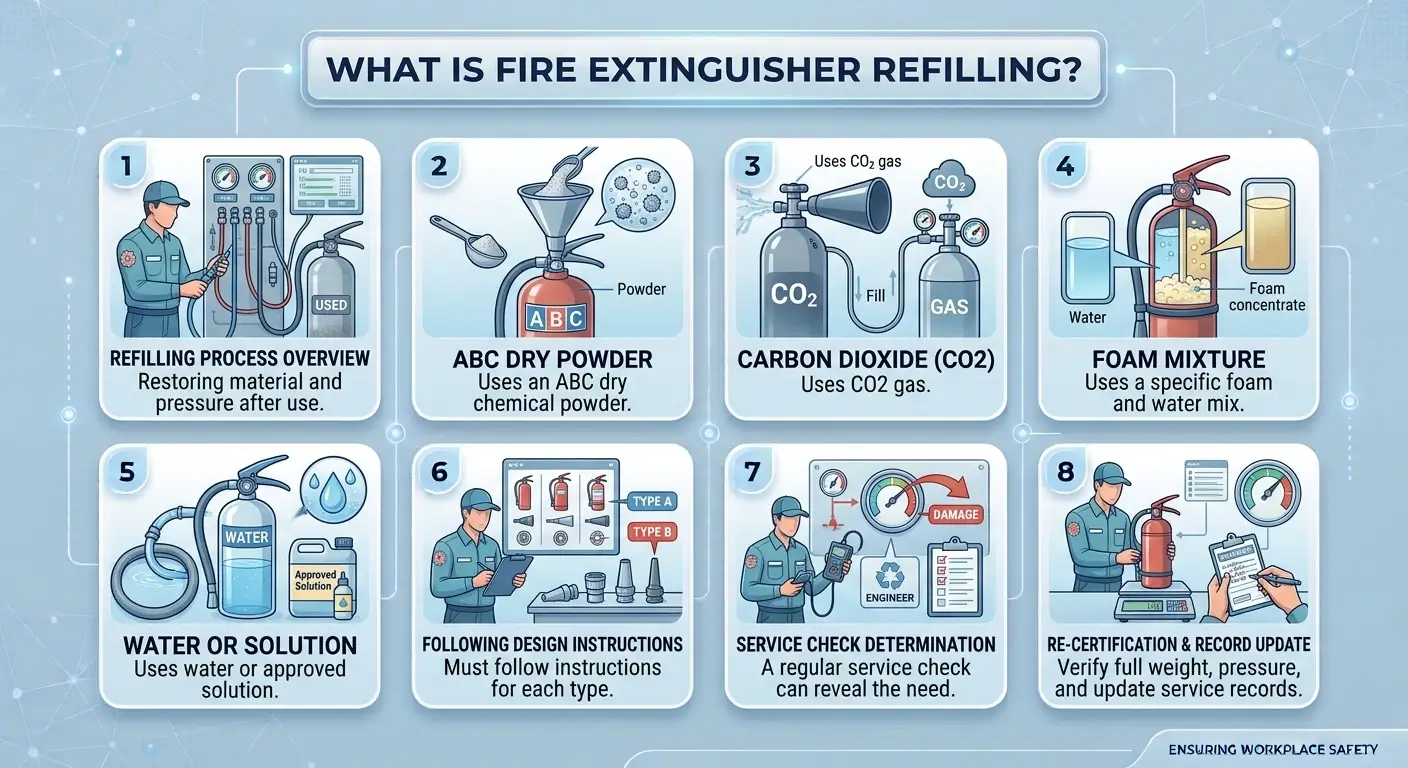
Refilling a fire extinguisher is restoring the right extinguishing material and, if needed, the correct pressure—usually after you’ve used it or a service check shows it needs refilling. Different extinguishers use different materials, so you have to follow the design and instructions for each.
For example:
• ABC dry powder extinguishers use a dry chemical.
• CO2 extinguishers are filled with carbon dioxide.
• Foam extinguishers use a specific foam mix.
• Water-based extinguishers use water or another approved solution.
Refilling isn’t just about topping it off. A qualified service provider should check the extinguisher, figure out why it needs work, use the right material, and run all the necessary tests before the unit goes back to its spot.
If there’s been a discharge, a leak, or some part got damaged, refilling alone might not cut it. More repairs could be needed.
And don’t try refilling or opening up an extinguisher yourself—these are jobs for the pros with the right gear and know-how.
What Is the Difference Between Inspection, Maintenance, and Refilling?
These three services are related, but they serve different purposes.
| Service | Main purpose | When it may be needed |
| Inspection | Identify visible problems and check readiness | At the required routine inspection intervals |
| Maintenance | Examine the extinguisher in greater detail and correct defects | At scheduled service intervals or when inspection identifies a problem |
| Refilling or recharging | Restore the extinguishing agent and required operating condition | After discharge or when servicing determines it is necessary |
| Component replacement | Restore the function of a defective part | When a hose, seal, valve, gauge, or other component is found defective |
| Required pressure testing | Verify cylinder integrity using the applicable procedure | At prescribed intervals or when required by the relevant rules and standards |
Say you find an ABC extinguisher with its pressure gauge in the red—get someone qualified to check it and, if needed, recharge it. If the hose is busted, that’s another fix to handle. With CO2 extinguishers, if they’re been discharged, a pro needs to follow the right steps and make sure everything’s in order before it goes back to work.
The inspection tells you what work is needed. Not every check ends in a refill.
Why Are Regular Fire Extinguisher Inspections Important for Businesses in Bangladesh?
Every business faces different fire risks, depending on what they do, how their building is designed, what’s in their electrical systems, what kind of materials are stored, and their daily routines.
Factories might have lots of machines and storing, offices are packed with electronics, office supplies, and files, and warehouses are often packed with packaging or flammable stock.
A solid fire safety plan takes all this into account and puts the right equipment in all the right places.
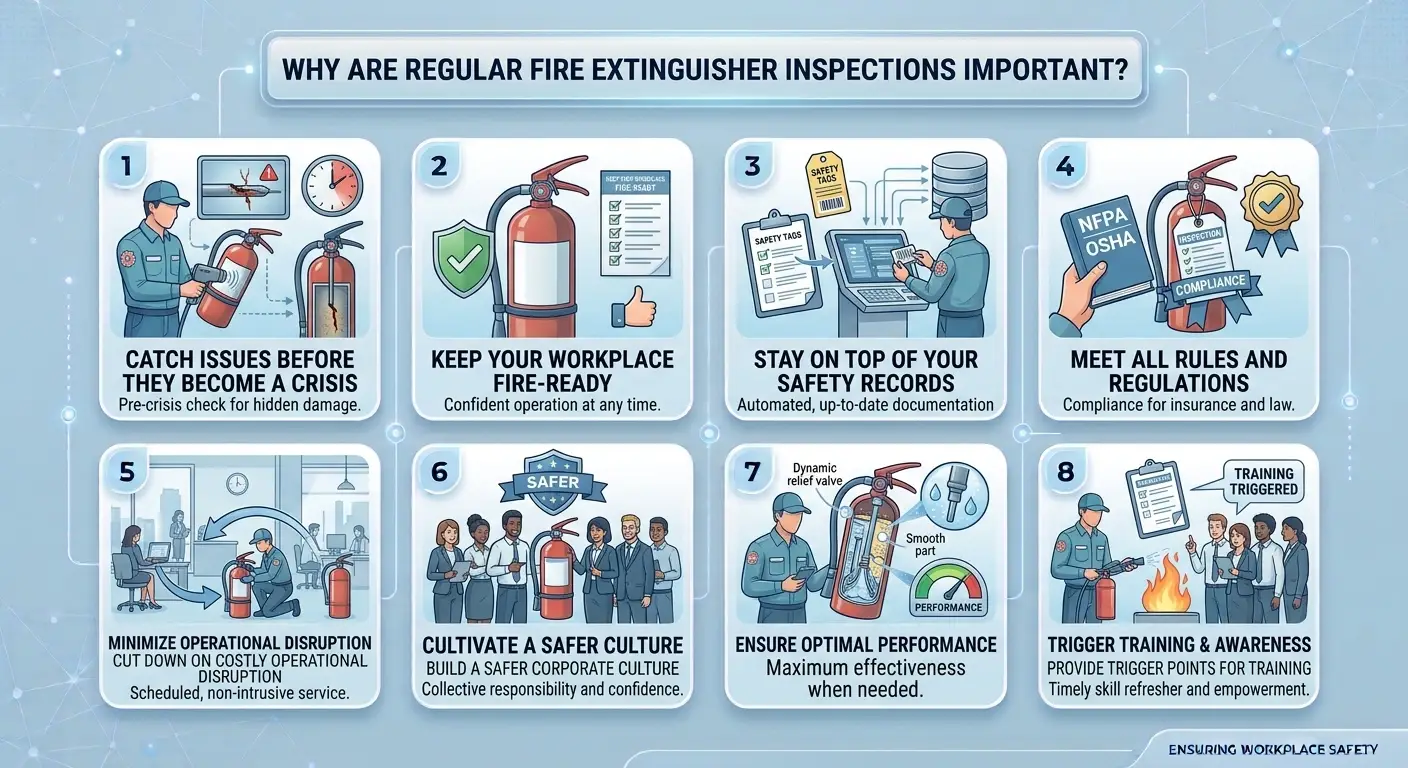
- Catch Issues Before There’s a Crisis
Regular checks can reveal missing extinguishers, busted hoses, low pressure, seals that are broken, corrosion, and other visible problems. Spotting these early means you can get repairs or replacements sorted before they become a real headache.
- Keep Your Workplace Fire-Ready
Extinguishers have to match the risks and be where you need them, when you need them. Regular inspections make sure everything is accessible and nothing gets missed.
- Stay on Top of Your Safety Records
Larger businesses might have dozens—or even hundreds—of extinguishers all over different buildings or floors. Inspection logs, service tags, and repair notes help you stay organized and track what’s been done where.
- Meet Rules and Regulations
There are rules you have to follow—whether they’re set by fire safety, building codes, workplace regs, insurers, or your industry. The exact requirements depend on your setup. Keeping organized inspection and maintenance records lets you prove you’re managing fire safety properly.
- Cut Down on Disruption
If you know what servicing is needed before there’s an actual emergency, you’re far less likely to have nasty surprises when you really need to use one of these extinguishers. Planned maintenance means you’re not left scrambling for repairs across departments or branches.
- Build a Safer Corporate Culture
Taking care of fire extinguishers is part of a bigger safety program—alarms, evacuation plans, emergency lighting, staff training, and so on.
How to Inspect a Fire Extinguisher: Step-By-Step
A quick visual inspection is something trained staff can do to catch obvious problems. But it doesn’t replace professional maintenance or more technical checks.
Here’s a practical checklist for routine workplace inspections.
Step 1: Check the Extinguisher’s Location
Make sure the extinguisher is where it’s supposed to be. If it’s been moved, taken away, or gone missing, note it and let your safety or facility manager know. It should be in an accessible place matched to the risk you’re trying to cover.
Step 2: Check Accessibility
There shouldn’t be any furniture, boxes, machines, or anything else in front of it. You want to spot and grab it fast in an emergency. Also check if all relevant signs are visible.
Step 3: Look Over the Cylinder Body
Check for damage like dents, rust, leaking, or anything else strange. Don’t use or put back a damaged extinguisher; call in a qualified service provider for an assessment.
Step 4: Check the Pressure Gauge (If There Is One)
Some extinguishers have a pressure gauge. Check if the pressure is where it should be according to the manufacturer. If it’s out of range, flag it for professional checking. CO2 extinguishers don’t usually have a regular gauge—they’re checked in other ways, including by weight.
Step 5: Inspect the Safety Pin and Tamper Seal
Both should be there and look untouched. If the seal’s broken or missing, the extinguisher might have been used or tampered with—don’t just assume it’s fine.
Step 6: Check the Hose and Nozzle
Look for cracks, damages, blockages, or loose fittings. Don’t try to clear or fix a blocked hose yourself—call the professionals.
Step 7: Read the Label and Instructions
Operating instructions should be clear and readable, and the extinguisher type must be easy to spot. Missing or unreadable labels need to be fixed.
Step 8: Check the Inspection Tag and Records
Look at the inspection tag or log. Write down the date, identification number, where it is, its condition, and what needs fixing. A missing or old tag needs investigating—it’s not proof that the extinguisher’s bad or good.
Step 9: Note Any Faults and Arrange Repairs
If you find a problem, write it down clearly. For instance:
• ABC extinguisher’s gauge out of range.
• CO2 extinguisher may be undercharged.
• Damaged hose.
• Missing safety seal.
• Rust showing on cylinder.
• Extinguisher missing from its spot.
Tell the responsible team to get repairs or replacements, and update the record once it’s sorted.
One last thing—just looking at an extinguisher doesn’t tell you everything about its inside condition. Stick to the official inspection schedule and call in the pros when needed.
How Often Should Fire Extinguishers Be Inspected and Serviced?
Inspection and servicing schedules depend on the extinguisher’s type, manufacturer’s advice, the standards that apply, your specific risks, and local rules. There’s no “one schedule fits all” here.
Routine Visual Inspections
Most safety programs recommend checking extinguishers monthly. But always check what’s required for your workplace and equipment. These checks focus on location, accessibility, visible damage, indicators, seals, and labels. High-risk areas might need more frequent checks.
Scheduled Professional Maintenance
Professionals should carry out maintenance based on the timeframes in the standards and from the manufacturer. Annual maintenance is pretty typical for most programs, but double-check what your setup needs. Some extinguishers need special checks at other intervals.
After an Extinguisher Has Been Used
Once an extinguisher is used—even just a little—it needs to be taken out of service, checked, and serviced or recharged. Don’t put it back until everything’s been done.
Fire Extinguisher Inspection for Factories in Gazipur and Narayanganj
Gazipur, Narayanganj, Savar, and Ashulia are some of the key spots for factories and industry in Bangladesh. In these factories, fire extinguishers aren’t just sitting in one room—they’re spread out across the production floor, electrical rooms, storage, offices, utility areas, pretty much everywhere you look. Keeping all this gear checked and ready isn’t easy unless you set up a clear inspection routine.
Key Areas for Factory Inspection
Each factory needs an inspection plan that’s tailored to its own setup. Usually, you’d cover:
- Production and assembly areas
- Electrical rooms and equipment spaces
- Warehouses and raw material storage
- Finished goods storage
- Loading and unloading areas
- Office and admin spaces
- Stairways, corridors, and exits
- Utility and service rooms
Which extinguishers go where, and what types you need, depends on your factory’s fire risks and any official requirements.
Managing Lots of Extinguishers
Big factories might have dozens—sometimes hundreds—of extinguishers. You need to tag each one with a unique ID or marking so you always know which is which. Then you keep a logbook or register. In there, you track where each one is, its type and size, what kind of shape it’s in, when you last checked it, all the service visits, and what still needs fixing.
For example:
Location: Factory, Level 2
Equipment: ABC dry powder extinguisher, 5 kg
Finding: Pressure gauge outside the normal range
Required action: Get it checked and serviced by a pro
Status: Waiting for work
Once it’s been fixed, you update the log with what was done and when. This way, safety officers and facility managers don’t have to rely on word-of-mouth; everything important is written down.
Fire Extinguisher Services in Sylhet, Rajshahi, Khulna, and Beyond
This isn’t just about Dhaka or Chattogram. Businesses in Sylhet, Rajshahi, Khulna, Cumilla, Mymensingh, Rangpur, Barishal, and other cities need proper extinguisher checks too. This includes offices, hospitals, hotels, schools, warehouses, property developments—anywhere with fire risks. You’ll need to tailor service plans to the site, number of extinguishers, what kinds you have, and whether there are qualified technicians nearby.
If your business has several locations, you might want all your inspections and servicing coordinated through a central record, but with local details for each site.
And before you commit, always make sure your chosen provider actually covers your location and can explain how they check, service, log, and return your equipment. Don’t just assume they’ll cover everywhere in Bangladesh unless they prove it.
What a Pro Fire Extinguisher Inspection Looks Like
A proper service call starts by identifying each extinguisher and looking it over. What the technician does depends on what’s needed and what they find.
Step 1: Identify the Equipment
They’ll note the extinguisher type, capacity, where it is, and any service history. That tells them what procedures to follow.
Step 2: Assess the Condition
They check for any obvious or technical problems—this depends on the kind of extinguisher and maintenance standards.
Step 3: Record Findings
Everything gets logged so the team knows which extinguishers are fine and which need fixing. Typical problems might be missing seals, damaged hoses, low pressure, rust, or needing a refill.
Step 4: Decide What’s Needed
The technician works out if the unit just needs a regular checkup, a refill, new parts, further testing, or to be pulled out of service. Not every extinguisher will need the same treatment.
Step 5: Do the Work
If it’s approved, the tech handles any servicing, using the right steps and parts. All servicing and checks must match the equipment specs and local rules.
Step 6: Final Checks and Updating Records
When it’s done, they double-check everything and update the records. Only put the equipment back once it’s ready to go. The business gets clear paperwork listing all completed work and pointing out any follow-up jobs.
Common Fire Extinguisher Problems Found During Inspection
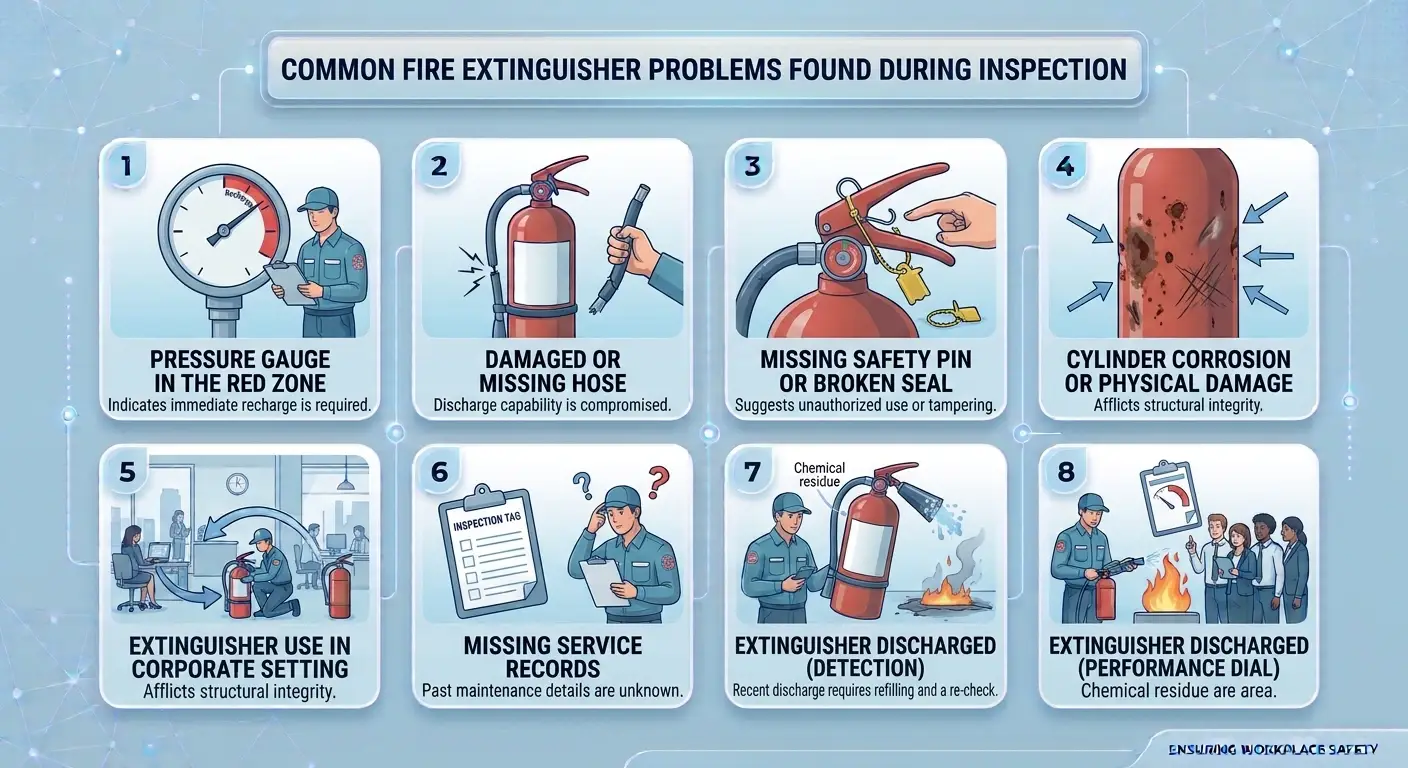
Regular checks spot all sorts of issues, including:
Pressure Gauge in the Red Zone
If the pressure’s off, you need a professional to check and fix it.
Damaged or Missing Hose
A broken, loose, or missing hose or nozzle means the extinguisher might not work. Qualified personnel need to assess and swap out any faulty parts.
Missing Safety Pin or Broken Seal
If the pin or seal is gone, someone probably used—or messed with—the extinguisher. It should be fully checked and serviced if needed.
Cylinder Corrosion or Physical Damage
Obvious rust, dents, leaks, or other damage mean you might have to remove or replace the unit. Don’t try to fix it yourself—get a pro.
Missing Service Records
If you can’t prove when it was last checked, you have to make sure it gets inspected and logged properly.
Extinguisher Discharged After Use
Never put a used extinguisher back without having it serviced and refilled as per the manufacturer’s guidelines.
Fire Extinguisher Inspection Checklist for Offices and Factories
A simple checklist can help safety officers organise routine visual inspections.
The following example can be adapted to the facility’s requirements.
| Inspection item | What to check | Action if a problem is found |
| Location | Extinguisher is in its designated place | Locate the missing unit or arrange replacement |
| Accessibility | Equipment can be reached without obstruction | Remove the obstruction or correct the layout |
| Identification | Extinguisher type and instructions are readable | Arrange appropriate identification or label replacement |
| Cylinder | No obvious damage, leakage, or concerning corrosion | Refer for professional assessment |
| Pressure gauge | Indicator is within the marked acceptable range, where fitted | Arrange professional assessment |
| Safety pin and seal | Present and apparently intact | Investigate and service as required |
| Hose and nozzle | No visible damage or missing components | Arrange inspection and suitable repairs |
| Service tag | Available and readable | Verify service history and update records |
| Inspection record | Current inspection findings are documented | Complete the required record |
| Corrective action | Previously identified issues have been resolved | Follow up with the responsible person |
This list covers basic visual checks. Technical servicing, deep maintenance, or pressure testing still needs to be done as required.
Fire Extinguisher Inspection and Maintenance Records
Good records matter, especially for bigger companies with lots of buildings or extinguishers. A proper register means you can spot overdue checks, ongoing problems, and any equipment that’s out of service.
Your log should capture:
- Extinguisher ID number
- Building, floor, or department
- Specific location
- Type and capacity
- Date inspected
- What was found
- What needs fixing
- Refilled/maintenance status
- Parts swapped (if any)
- Service provider or technician
- When work finished
- Next inspection due
- Any outstanding problems and who’s responsible
If you have 40 extinguishers spread across an office, a digital spreadsheet’s the easiest way to keep track without piles of notes. If you’re running multiple sites, each location maintains its own details, but reports up to central safety or facility management.
Make sure the record matches the work done. Don’t let a simple tick-box inspection log be confused for proof of detailed technical service or pressure tests.
How to Choose a Fire Extinguisher Service Provider in Bangladesh
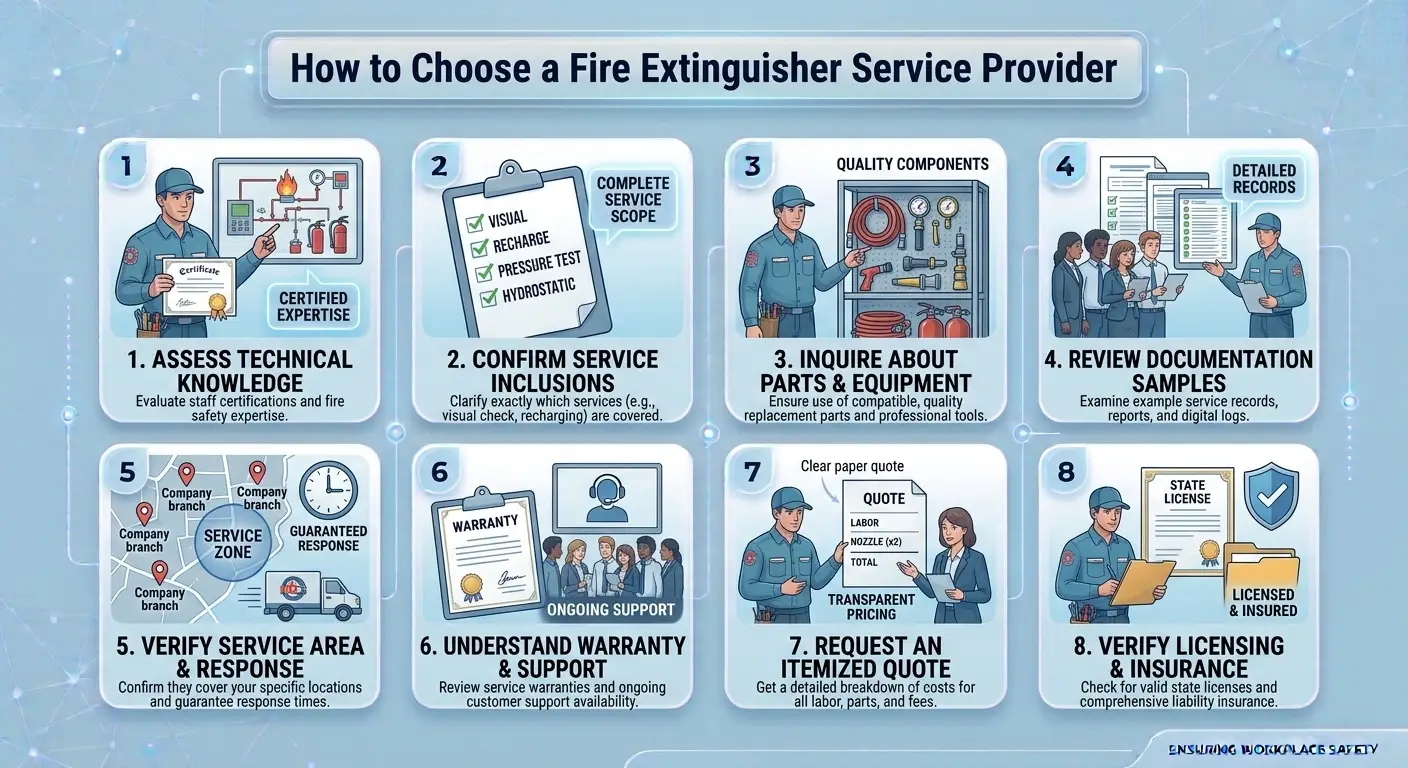
Fire extinguishers save lives—so pick your service provider carefully. Don’t just go for the cheapest quote; look for real expertise and practical support.
- Check Technical Knowledge
Ask how much experience the technicians have with your types of extinguishers and if they’re trained in relevant servicing procedures. - Confirm What’s Included
Check if the quote covers everything—inspection, refilling, parts, transport, testing, proper documentation. Don’t be caught off guard by hidden extras. - Ask About Equipment and Parts
Make sure the provider can source the right spare parts and extinguishing agents for your equipment. Compatibility is important. - Look at Documentation
Do they give full inspection reports, service tags, refill logs, details on replaced bits, and info on any problems found? You need this for both safety reviews and audits. - Check They Serve Your Area
If you’re outside Dhaka or Chattogram, confirm your provider does actually serve Gazipur, Narayanganj, Sylhet, Rajshahi, Khulna, etc., and can handle multi-site coordination. - Understand Warranty and Support
What happens if something goes wrong with a serviced extinguisher? Clarify any warranty and the process for resolving issues, all in writing. - Ask for an Itemized Quote
A breakdown of costs (inspection, parts, refill, transport, etc.) makes it easier to compare different offers.
How Much Do Fire Extinguisher Inspection and Refilling Services Cost in Bangladesh?
Prices depend on the type, capacity, and condition of extinguishers, how many you’ve got, where you’re located, and what services are needed. There’s no flat rate.
Cost Factors:
- Extinguisher type (ABC powder, CO2, foam, water)
- Agent and capacity
- Equipment condition (simple checks vs. repairs)
- Total number (bulk jobs might get discounts)
- Location (out-of-area jobs can cost more)
- Required paperwork (detailed records can add to cost)
How to Get an Accurate Quote
When reaching out to a provider, send them:
- Your type of business/premises
- Where you’re located
- Number of extinguishers
- Their types and sizes if you know them
- Any known problems (gauge off, missing seal, used before, etc.)
- Whether you just need a check or full servicing
- If you want individual reports or a bulk one
The more details you give, the more accurate the quote.
Fire Safety Requirements and Compliance in Bangladesh
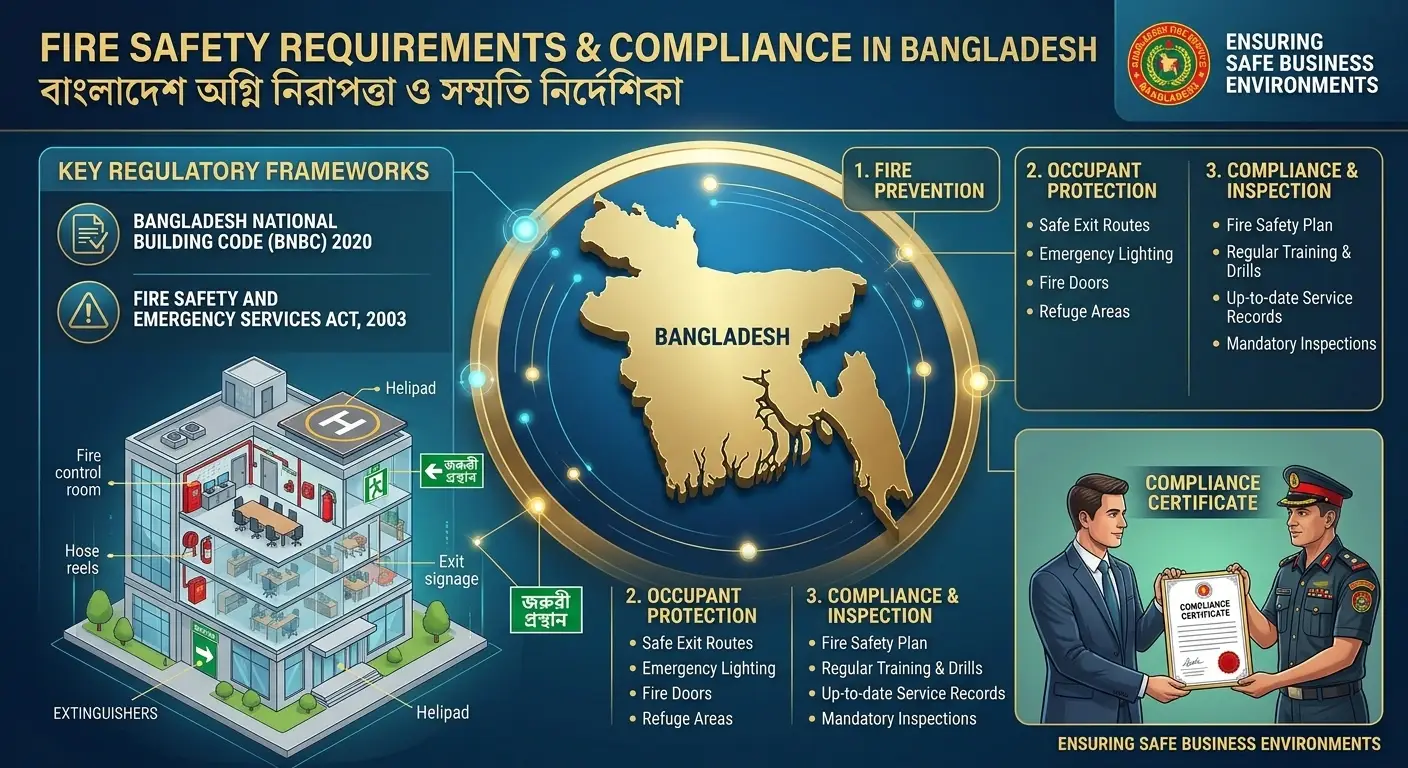
Businesses everywhere in Bangladesh must follow fire safety rules for their buildings and activities—these include laws, building codes, workplace safety rules, fire licences, insurance, and recognized maintenance standards. What applies can depend on your type of business, building, industry, and which regulatory authority oversees you.
A big factory will have different requirements than a tiny shop or office. The best bet: consult with the right authorities and qualified fire safety professionals to get a handle on what applies to your specific place.
The Bangladesh Fire Service and Civil Defense is a go-to source for fire safety info. Sometimes, your line of work means you’ll need to check with specialist authorities too.
When setting up a maintenance program, know:
- The right inspection intervals
- What professional maintenance needs to be done
- If certain extinguisher types need special tests or checks
- What paperwork you must keep
- Any specific licence or approval requirements
- How to handle defective or used units
- What extra fire protection you need for your risks
A service provider can help with tasks and records, but you—the owner or responsible manager—must make sure the overall fire safety program ticks all the compliance boxes.
FAQ: Fire Extinguisher Services in Bangladesh
What is a fire extinguisher inspection?
It’s checking where the extinguisher is, that you can reach it, its overall condition, pressure gauge (if there is one), safety seal, label, and maintenance log. It helps spot units that need service or replacing.
Inspection vs. maintenance—what’s the difference?
Inspection’s a routine check, mostly visual. Maintenance is more in-depth—includes technical work, servicing, swapping out parts, etc.
When does an extinguisher need refilling?
After it’s been used (even a little), or if a technician finds it’s lost pressure or needs restoring. Always have a qualified person handle this.
How often should you inspect fire extinguishers?
A lot of workplaces do a monthly visual check, but always check what actually applies to your site and equipment.
How about professional maintenance?
Annual maintenance is common, but you need to go by what your equipment manufacturer, industry standards, and regulations require—some types need testing more often.
Can staff do inspections themselves?
Trained staff can handle basic visual checks. Anything technical—recharging, inside checks, pressure tests—should be left to qualified pros.
What if a pressure gauge reads in the red?
Treat it like a problem right away. Get it looked at by a professional before putting it back into service.
Do CO2 extinguishers have gauges?
Most CO2 units don’t have the same gauges as ABC types, so you need to check them a different way.
Are extinguishers serviced after any use?
Absolutely. Even if only partly used, any extinguisher needs servicing and a top-up before you put it back.
Can you replace damaged hoses?
Often, yes—but only if it’s compatible with the extinguisher model. A pro should handle this.
What types can be serviced?
As long as the provider is set up for it, ABC powder, CO2, foam, and water types are all common. Always confirm they can service your specific models.
Are services available in Dhaka?
Yes—you can get fire extinguisher inspection and maintenance in Dhaka for offices, factories, businesses, etc. Just make sure the provider covers your location and can provide clear documentation.
What about factories in Gazipur and Narayanganj?
They can set up inspections and servicing by contacting local providers—just confirm they’ll actually visit your factory and can look after your equipment.
What should an inspection report include?
At minimum: extinguisher ID, location, type, size, inspection date, findings, what needs fixing, service status, when completed. Some places might call for extra info.
How do I estimate refilling costs?
List all your extinguishers—their types, sizes, where they’re located, and any known problems. Ask for an itemized quote covering every part of the service.
Why keep maintenance records?
Records let managers keep an eye on equipment status, make sure checks are up to date, follow up on faults, and document fire safety for audits—especially when you’re managing lots of sites.
Can servicing help with compliance?
Proper inspection, maintenance, and documentation support compliance—but don’t think they alone will cover all legal or building requirements.
How do I arrange inspection for more than one location?
Log every site separately: location, extinguisher type, size, condition, service history. Set up a coordinated inspection plan with a provider who covers all your sites.
Conclusion: Stay Ready with Proper Fire Extinguisher Maintenance
Regular inspection, maintenance, and refilling keep workplaces in Bangladesh safer. A solid program means you spot and fix problems early, keep clear records, and know where all your equipment is—whether in an office, factory, warehouse, or store.
But remember: fire extinguishers aren’t a “set it and forget it” thing. They need the right type for the risk, regular checks, proper maintenance, and recharging after use. That’s how you’ll keep people and property safe.
If you’re running an organization in Dhaka, Chattogram, Gazipur, Narayanganj, Sylhet, Rajshahi, Khulna, or anywhere else in Bangladesh, the first step is pretty straightforward: make an equipment register, check the condition of your fire extinguishers, and set up a clear maintenance schedule.
You’ll also want to pick service providers who really know what they’re doing—look for proper technical know-how, compatible replacement parts, clear paperwork, and actual support in your area. When facility managers and safety officers take this step-by-step approach, they handle fire extinguishers more efficiently and help keep the workplace safe.
If you need your fire extinguishers inspected, serviced, or refilled—whether it’s for your office, factory, warehouse, or commercial space—just get your equipment list and site details ready, then reach out to a qualified fire safety provider for an assessment and a detailed quote.